Pattern interrupts for Reels and talking-head video
A pattern interrupt is a deliberate break in the visual rhythm your viewer has settled into — a frame inversion, a hard style switch, a zoom, a cut to something unexpected. Its job is to reset attention at the exact moment it would otherwise drift.
In a talking-head video, where the frame is one person talking, interrupts do the work that scene changes do in edited footage.
What an interrupt looks like in captions
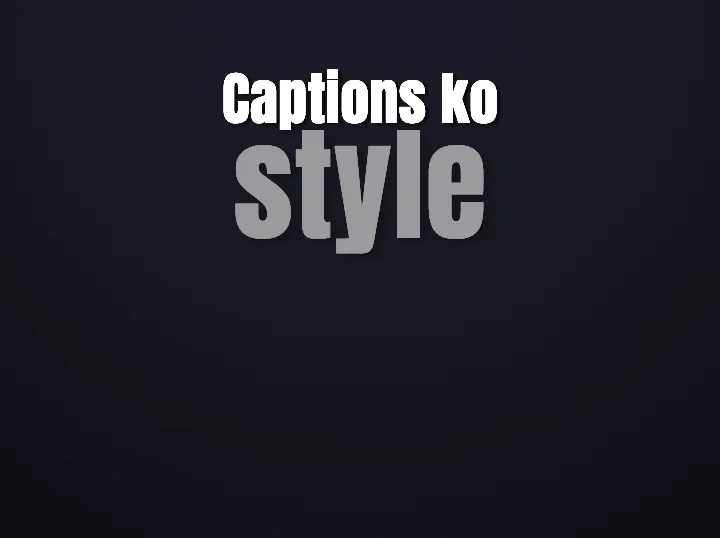
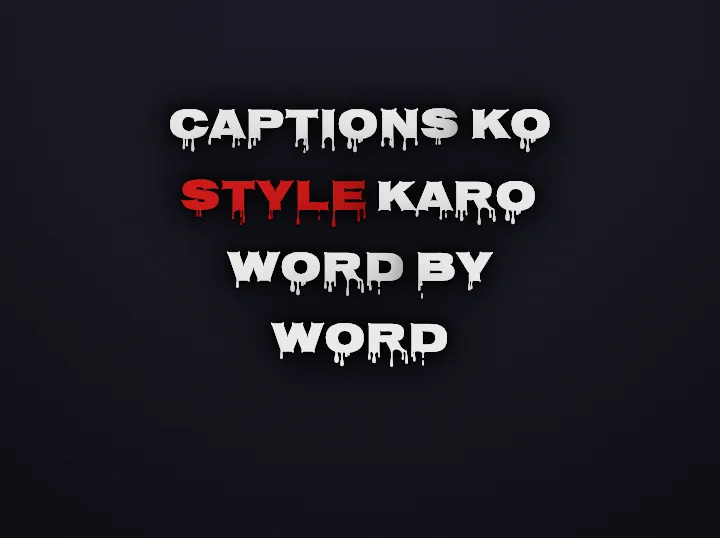
Both are real Headroom renders. Because styles apply per caption, an interrupt can be one phrase long — the baseline style returns on the next line, which is exactly what makes it an interrupt instead of a theme.
The four interrupts that work in talking-head video
1. The caption break
Switch the caption style on the turn of the argument — the “but here is the thing” line gets a different treatment. Cheapest interrupt; no footage needed.
2. The frame change
Punch-in, angle switch, or a walk-and-talk cut. Reframes the same person so the brain re-engages with the “new” image.
3. The insert
B-roll, a screenshot, a held-up object. Strongest interrupt and the most work — save it for the moment your point needs proof, not decoration.
4. The sound hit
A sound effect on a key word. Works even for the muted majority when paired with a visual emphasis on the same word — the two reinforce each other.
How often? Less than the advice says
You will find rules online ranging from “one every 3 seconds” to “3 per video” — they cannot both be right, and neither is a law. The honest version: an interrupt works because it is rare relative to the baseline. In a 30-second talking head, two or three well-placed interrupts — hook, mid-point turn, payoff — is usually the ceiling.
The failure mode is making the interrupt the baseline: if every line inverts, dribbles, or slams, the viewer's eye normalizes it within seconds and you are back to monotony — just a louder one. Constant motion is not the same as change; see the boring-Reels diagnostic for the flat version of the same trap.
Keep going
One phrase, one interrupt
Per-caption styling means the X-Ray hook and the clean explanation live in the same video.